
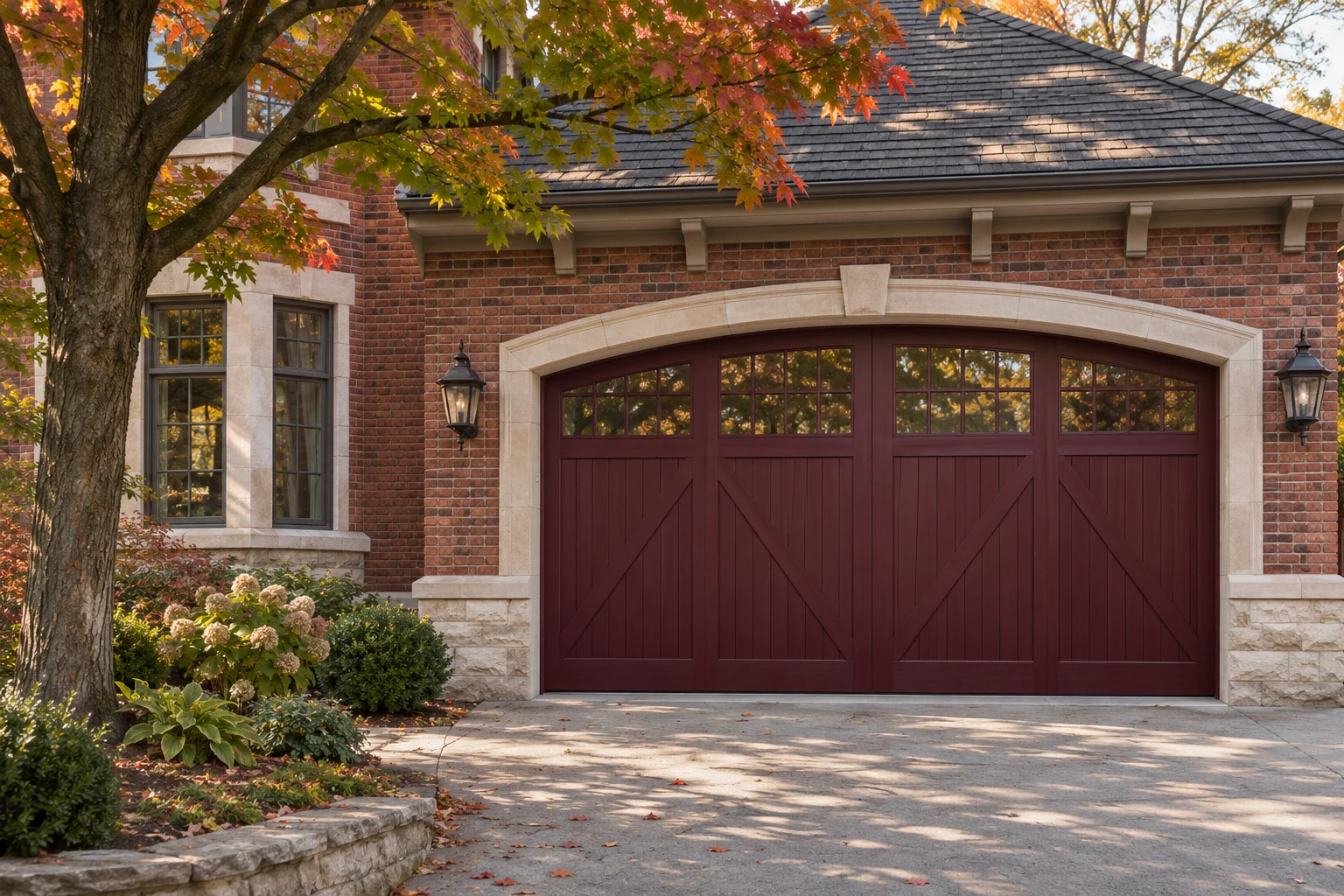
Start at the opening, not the brochure
A replacement on a Cincinnati brick garage should be planned around the opening that exists. Width, height, headroom, side room and backroom all influence the system. An attractive door shown on a wide modern home may need a different track arrangement in an older detached garage.
Our garage-door replacement service page outlines the assessment. Before comparing options, ask the installer to describe which measurements have been verified and which conditions remain to be checked on site.
Make the component list explicit
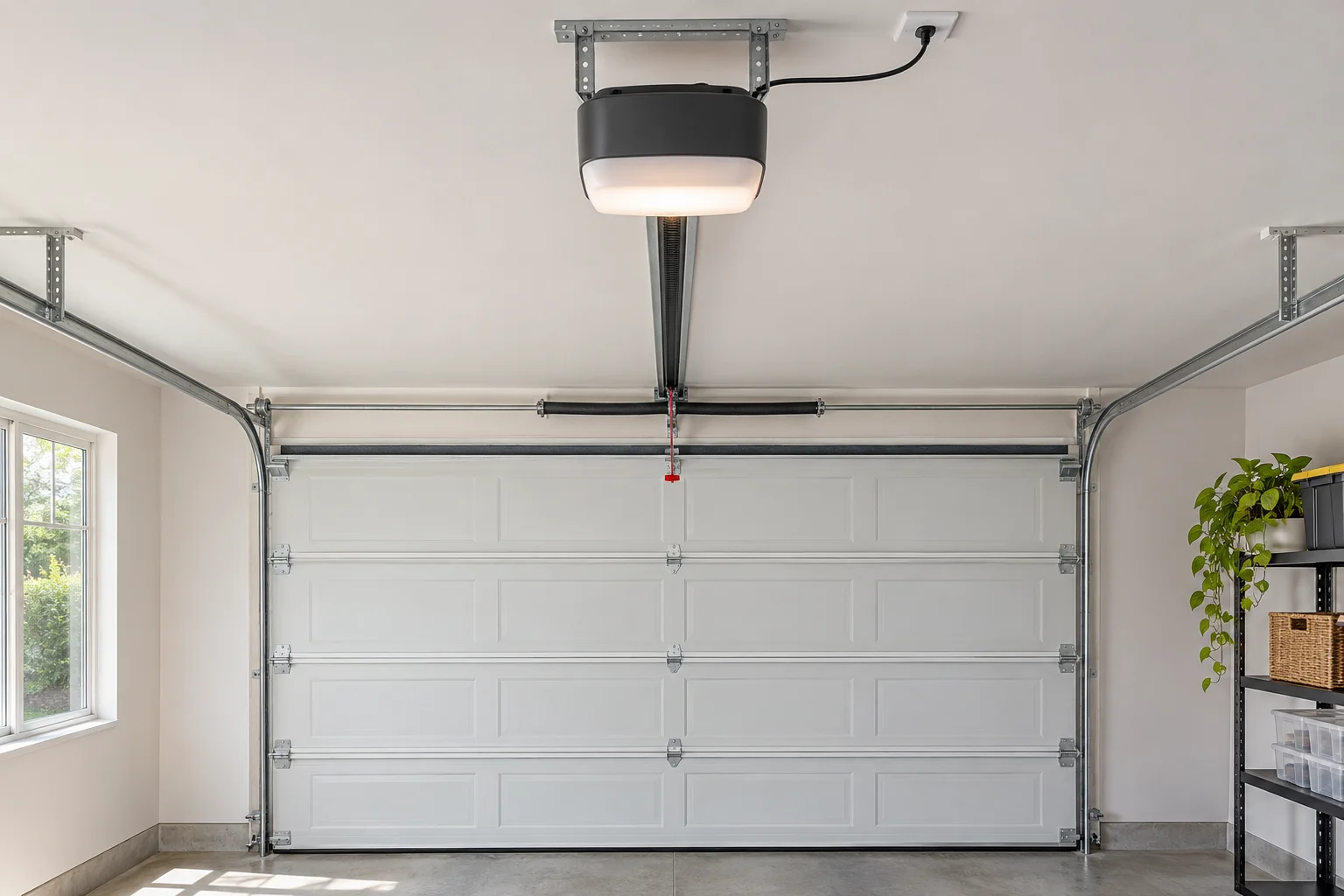
The panels are the visible part. Tracks guide them, springs counterbalance their weight, cables carry lifting load, and the operator assists a balanced door. Changing the weight or construction can affect several of those parts at once.
| Scope item | Clarification to request |
|---|---|
| Door sections | Model, construction, finish and glazing |
| Tracks | New or approved compatible existing tracks |
| Spring system | Selected for the actual new door weight |
| Seals and trim | Perimeter fit and threshold limitations |
| Operator | Retained, repaired or separately replaced |
| Old materials | Removal and disposal included or excluded |
Reuse should be a compatibility decision
A newer opener may be suitable to retain. That does not automatically make the old track and springs suitable. Ask how each retained component is verified against the new door manufacturer’s instructions. A system that looks similar can still have different track geometry or reinforcement requirements.
If the existing operator has persistent problems, compare opener repair with opener installation. Keep that choice distinct from whether the door panels are structurally serviceable.
Do not let insulation become the whole specification
Thermal performance is one part of comfort. Air leakage around the perimeter, the garage’s relationship to living space, glazing and daily use also matter. Manufacturer R-values may describe panel insulation rather than the performance of the complete installed opening. Ask what the published figure actually measures.
For an unconditioned detached garage, finish durability or daylight may matter more than the highest insulation claim. For an attached garage, noise, perimeter sealing and room adjacency may change priorities. No single specification guarantees energy savings.
Think about the architecture you have
Carriage proportions can suit a brick facade, but windows and decorative hardware should not interfere with function. Review real samples or manufacturer documentation rather than relying on a screen color. Confirm any applicable neighborhood design rules before ordering.
Addyston and Camp Dennison pages discuss narrower and detached opening considerations. Coverage remains limited to the ZIPs listed on those pages; a style example is not a completed local project.
End with a handover plan
Ask how balance, travel and automatic safety features will be checked. Keep the door and operator manuals, product identifiers and written scope. Know the safe operating procedure before the installer leaves, including what to do during an outage. A well-defined handover is more useful than a vague promise that everything is included.
Primary technical reading
The DASMA safety library explains garage-door system precautions. Its technical data sheets support product and installation questions. These general references do not replace the exact door and operator manufacturer’s instructions. For a local request, confirm your ZIP in our service-area directory, then describe the symptom and safe access by phone.