
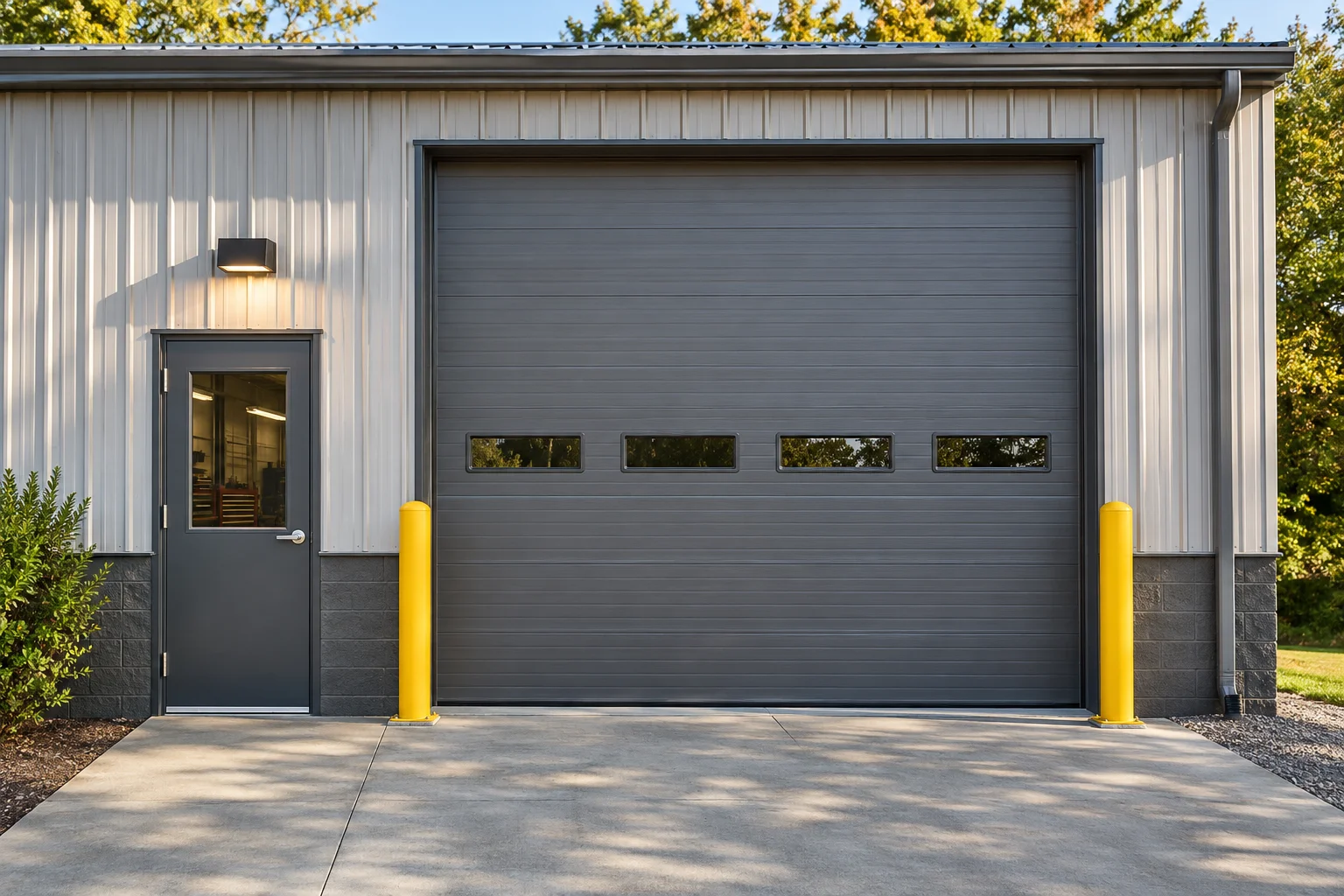
Treat access and safety as separate priorities
A stuck loading-bay door can disrupt work, but moving the door by force can create a second hazard. Keep pedestrians and vehicles away from the opening. Follow the site’s established equipment isolation procedure and notify the responsible site contact before anyone works near the assembly.
Our commercial garage-door repair page explains the request information needed to qualify a system. Commercial doors differ in construction, duty and safety controls; a residential repair description is not enough.
Identify the assembly without dismantling it
From a safe position, record whether the door is sectional, rolling steel or another type. Note the approximate opening size, operator model and whether there are visible impact marks. A photograph of a safely reachable label can be more informative than a guess about the door’s capacity.
| Information | Why it helps |
|---|---|
| Door type and dimensions | Qualifies the assembly and likely equipment |
| Operator label | Identifies model-specific controls and parts |
| Position when stopped | Explains access and immediate exposure |
| Impact or unusual noise | Directs the inspection to related components |
| Frequency of use | Describes duty requirements |
| Specialty rating | Flags a need for appropriate expertise |
Do not defeat the controls
An interlock, edge sensor or photo-eye may be stopping movement for a reason. Do not bypass it to finish a delivery. A control fault and a mechanically jammed door can feel similar to an operator standing at the wall station, but the safe repair path is different.
Avoid standing beneath the curtain or using forklifts, vehicles or improvised supports to hold it. Site personnel should use their established safe-work procedures rather than treating an online guide as a lifting plan.
Separate ordinary and specialty work
Fire-rated assemblies and specialty industrial doors need appropriate model-specific service. Ask whether the request can be supported before arranging a visit. State the rating or manufacturer information if it is available; do not infer it from the door’s appearance.
In Mount Orab, a larger work-building opening may be a different request from a home garage. In Middletown, access and equipment details are equally important. Both remain restricted to the listed postal ZIPs.
Ask for the whole fault explanation
If an impact pushed a door out of its guides, repositioning alone may not resolve damaged supports, panels or lifting hardware. Ask what was inspected, which components need replacement and which controls will be tested before return to use.
Record the completed work in the site’s maintenance history, including the product model and any follow-up recommendations. A recurring problem should be considered in relation to duty, alignment and previous damage rather than repeatedly reset without explanation.
Confirm scheduling and capability by phone
Calls and requests may be made 24/7, but acceptance of a particular assembly and service timing must be confirmed. Do not treat a submitted request or a ringing phone as a confirmed dispatch. Keep the area controlled until the responsible site contact has an appropriate plan.
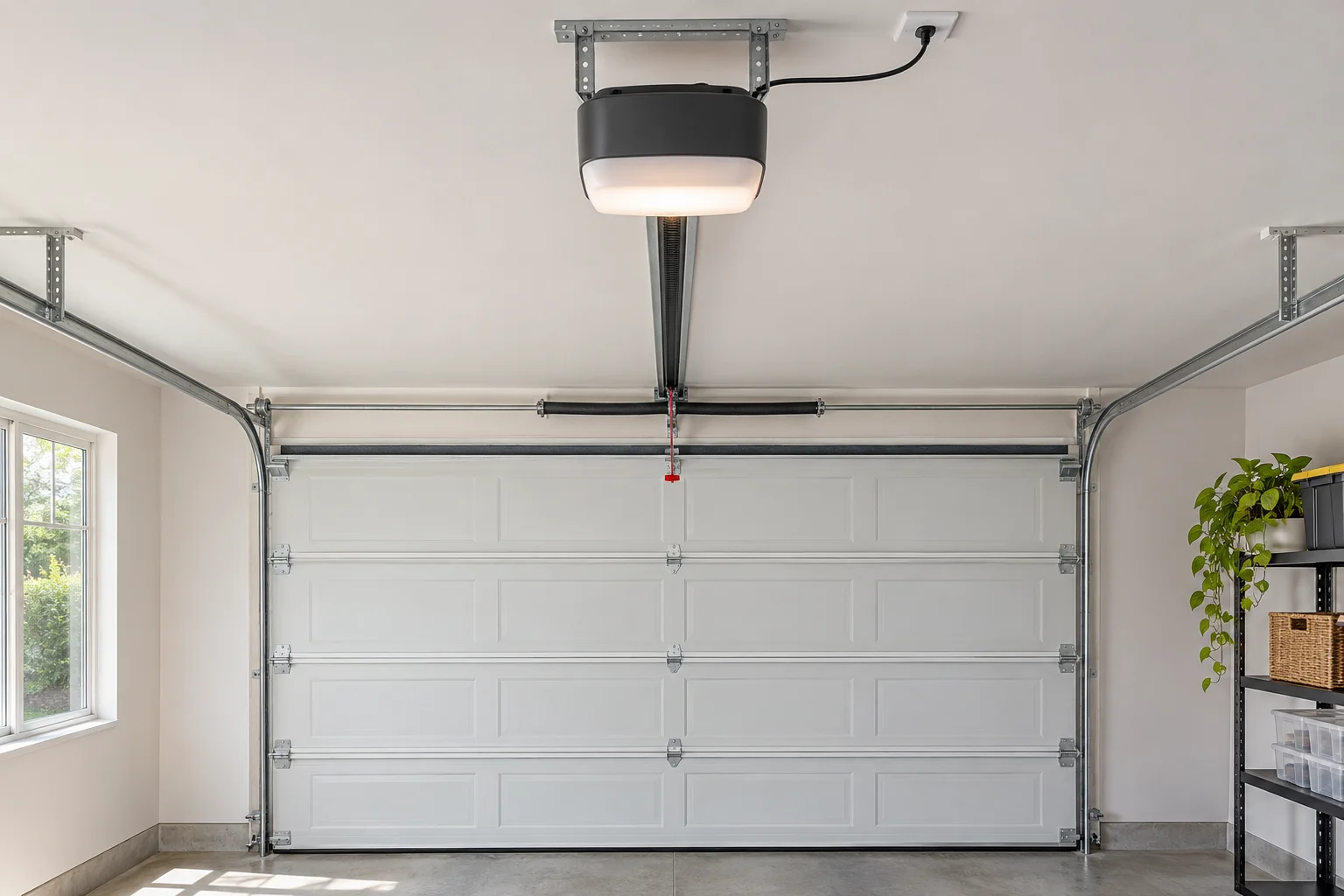
Primary technical reading
The DASMA safety library explains garage-door system precautions. Its technical data sheets support product and installation questions. These general references do not replace the exact door and operator manufacturer’s instructions. For a local request, confirm your ZIP in our service-area directory, then describe the symptom and safe access by phone.