
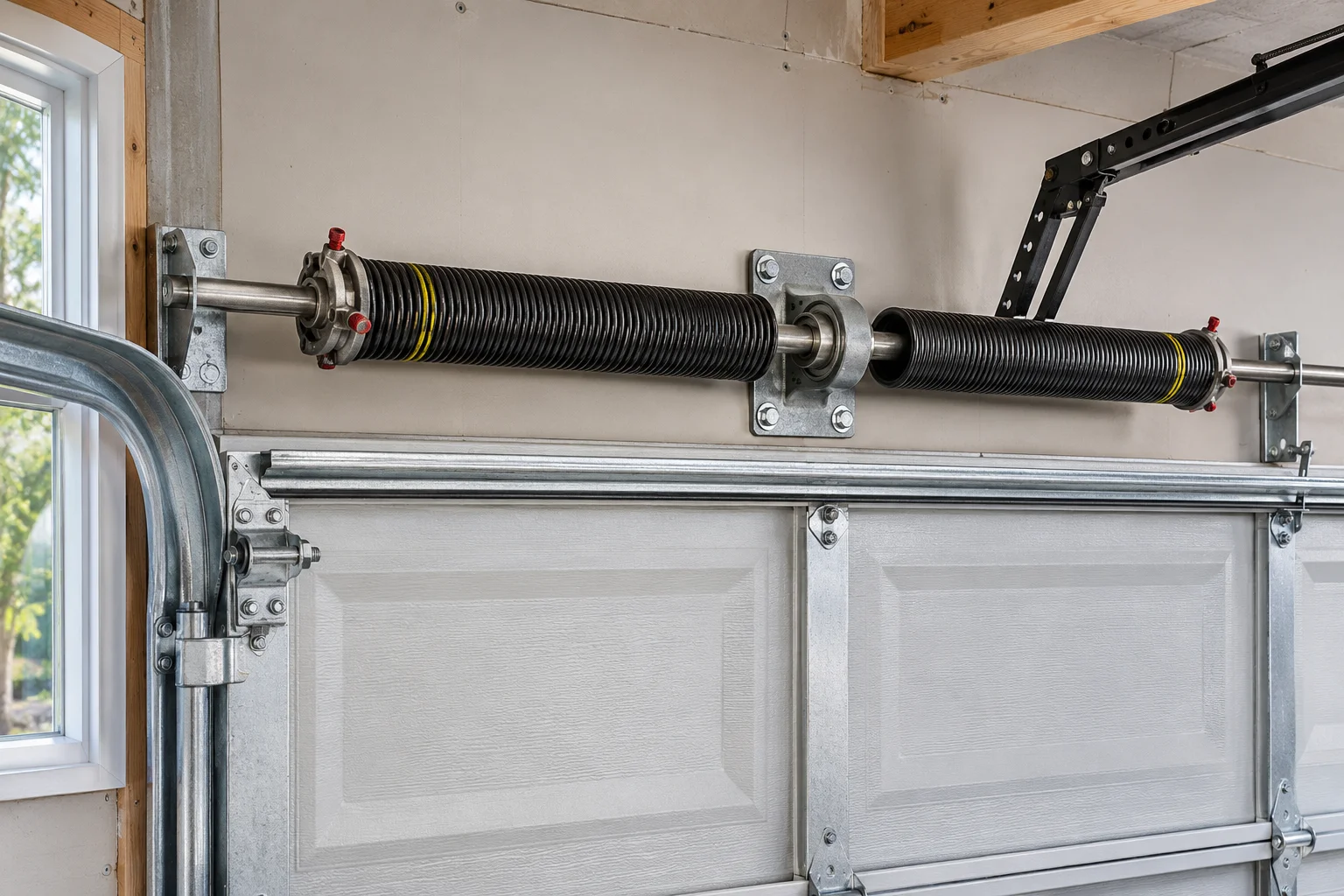
The opener is not the main lifting system
A residential garage door relies on springs to counterbalance its weight. The motor assists a properly balanced door; it is not intended to compensate for a failed spring. If you hear a bang and the door suddenly feels or behaves differently, stop operating it and arrange a spring-system assessment.
Do not test the theory by repeatedly pressing the remote or trying to lift the door. A door can be much heavier than expected after spring failure, and connected cables may be unevenly loaded.
Clues you can describe without touching
A torsion spring may show a gap in its coil above the opening. An extension system uses springs along the sides of the horizontal tracks. Not every system is easy to identify, and not every heavy-door symptom proves that a spring has broken.
| Observation | Useful next step |
|---|---|
| New gap in an overhead coil | Stop use and describe its location |
| Door lifts only a short distance | Stop repeated opener attempts |
| One side rises differently | Keep clear and mention cable/track concern |
| Sudden bang while closed | Look from a safe distance only |
| Door slams or drops | Keep people away from the opening |
A replacement has to match the door
Wire size, spring dimensions, winding arrangement and the actual door weight influence selection. The correct replacement is not established by choosing a spring with a similar appearance online. A previous installation may already have used an unsuitable part.
Ask the technician to explain how the door is measured and balanced, and whether bearings, drums, cables or anchors also show wear. If a two-spring system is fitted, ask about the condition of both springs without assuming a universal replacement rule.
Do not create a second repair
A motor struggling against an unbalanced door can stress drive parts and attachments. Increasing force settings does not restore counterbalance. Our opener repair page explains why the door’s mechanical condition must be evaluated before the motor is blamed.
Never loosen a bottom bracket, unwind a cone, disconnect a lifting cable or use improvised tools to handle spring tension. These are trained-service tasks with stored-energy hazards. Keep bystanders outside the garage opening while the problem is unresolved.
Prepare the call, not the hardware
Provide the property ZIP, door position and whether you have another safe entrance. State whether a vehicle is trapped, but do not move beneath an unstable door to retrieve it. In West Chester and Hamilton, the listed ZIP pages help verify the footprint before arranging a request.
Understand the finished check
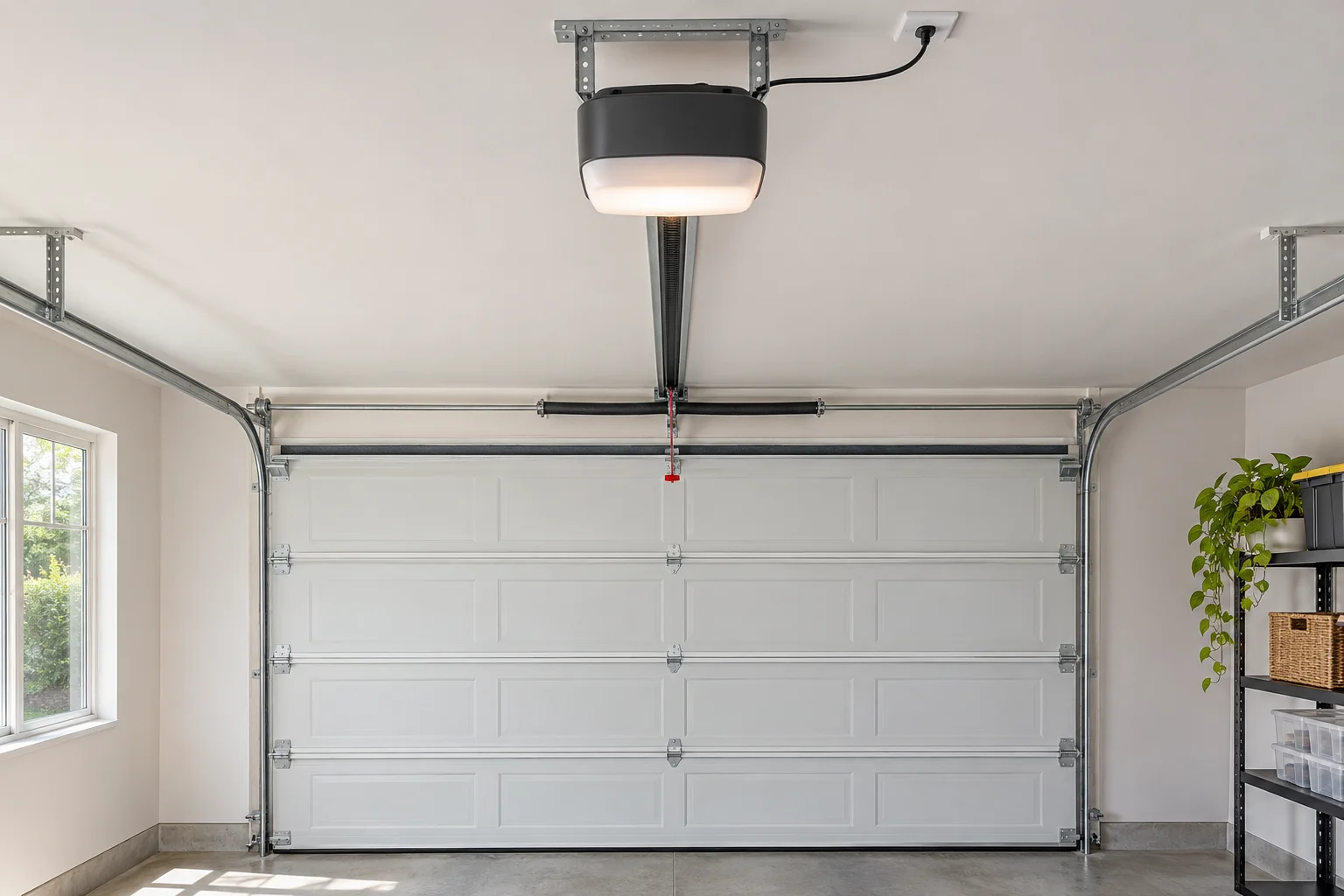
After appropriate work, ask how balance and smooth travel were verified before reconnecting the operator. Ask which safety tests apply to the exact opener and what inspection schedule its manual recommends. A spring replacement should be understood as part of a connected door system, not simply a coil swap.
Calls and repair requests may be made 24/7. Availability and scheduling are confirmed separately; a request does not establish a dispatch time.
Primary technical reading
The DASMA safety library explains garage-door system precautions. Its technical data sheets support product and installation questions. These general references do not replace the exact door and operator manufacturer’s instructions. For a local request, confirm your ZIP in our service-area directory, then describe the symptom and safe access by phone.